
July Uprising Day Marked Across Bangladesh
- Update Time :Wednesday, August 5, 2026
Bangladesh Marks ‘July Uprising Day’ on Second Anniversary of 2024 Mass Movement
Dhaka, Aug 5: Bangladesh is observing July Uprising Day today, marking the second anniversary of the student-led mass uprising that culminated in the fall of the Awami League government on August 5, 2024.
Among participants in the movement, the day is also referred to as “36 July“—a symbolic expression reflecting the prolonged and intense nature of the protests.
The government has declared a public holiday to commemorate the occasion. Nationwide programmes are being held to honour those who lost their lives during the movement, including wreath-laying ceremonies, the inauguration of the July Uprising Memorial Museum, receptions for families of the martyrs, discussions, and remembrance events.

The July-August 2024 movement has been described by different groups using various names, including the July Mass Uprising, the Monsoon Revolution, and the July Revolution. Political analysts say that, despite its unique political and historical context, the movement has drawn comparisons with several landmark popular uprisings around the world.
The protests began on July 1, 2024, when students launched demonstrations demanding reforms to the quota system in government jobs. The movement gained significant momentum after then Prime Minister Sheikh Hasina’s remarks on July 14 regarding the “Razakar” issue and her stance that the matter should be resolved through the courts.
That night, thousands of students from the University of Dhaka and other educational institutions took to the streets, chanting slogans that quickly became synonymous with the movement.

Tensions escalated on July 15, when allegations emerged that members of the Bangladesh Chhatra League had attacked protesters. Clashes subsequently spread across universities and educational institutions nationwide.
On July 17, Abu Sayeed, a student of Begum Rokeya University in Rangpur, was killed in police firing. Video footage of the incident circulated widely on social media, intensifying public anger and giving fresh momentum to the protests.
The government imposed a curfew on July 19 as violence escalated. Throughout the movement, the deaths of students and civilians sparked widespread outrage, prompting teachers, parents, lawyers, journalists, artists, writers, and people from various professions to publicly express solidarity with the protesters.
During the same period, several coordinators of the Anti-Discrimination Student Movement were detained by the Detective Branch of police. Videos later released showing them announcing the withdrawal of the movement generated widespread criticism and debate across the country.
On August 3, protesters gathered at the Central Shaheed Minar in Dhaka and replaced their earlier nine-point demand with a single demand—the resignation of the government.
The following day, organisers announced the “March to Dhaka” programme. Reports of deadly clashes from different parts of the country on August 4 further heightened tensions.
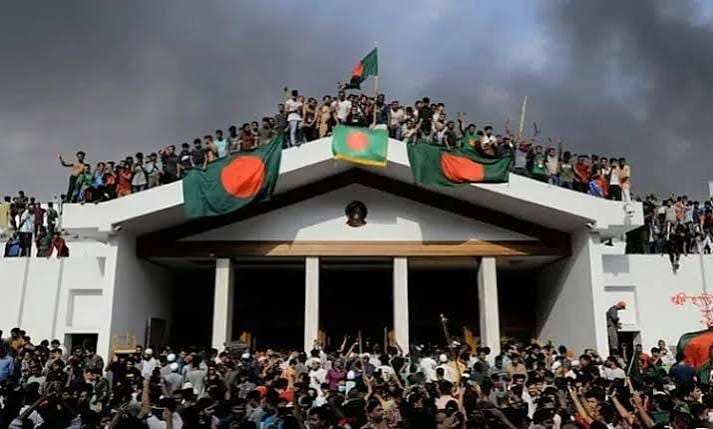
On August 5, hundreds of thousands of people poured onto the streets in Dhaka and elsewhere. By midday, the situation changed rapidly after the Inter-Services Public Relations Directorate (ISPR) announced that the army chief would address the nation. Shortly afterwards, reports spread that then Prime Minister Sheikh Hasina had resigned and left the country, bringing an end to more than 15 years of Awami League rule.
The day is now officially observed each year as July Uprising Day, commemorating those who lost their lives during the movement and reflecting on one of the most significant political developments in Bangladesh’s recent history.